Background
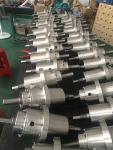
Engineers new to coating frequently confuse “cylindrical cathode” and “rotary cathode” — the names sound alike and both are slender cylinders. In practice they differ sharply. Cylindrical cathodes have a stationary target and stationary magnetics, suited for small chambers needing high uniformity. Rotary cathodes have a target tube that spins around the magnet bar, used in large-area architectural-glass and display-panel inline production. Pick wrong and you halve your target utilisation and miss throughput.
How it works
A cylindrical cathode is essentially a planar cathode rolled into a tube — the sputter zone is fixed on one side of the target, utilisation 25–35%. Simple structure and low maintenance make it suitable for pilot lines and small production. A rotary cathode has a fixed magnet bar inside a rotating target tube; the sputter point is fixed but the tube rotates, so the entire circumference is consumed evenly, pushing utilisation to 70–85% with much lower particle defects. But rotary cathodes are mechanically complex — sealed water rotary unions, sliding electrical contacts or liquid-metal current rings, and rotation control.
Application notes
Process area under 1 m²: pick cylindrical — better cost ratio, simpler upkeep. Process area over 1 m², or runs requiring 5000+ unattended hours: rotary is mandatory. Precious metals (Ag, Au, Pt): rotary is more expensive but total cost of ownership wins because of utilisation. Insulating coatings (e.g., ITO): DC mid-frequency pulse on rotary is most stable. Particle-sensitive processes (OLED, semiconductor): rotary’s particle level is meaningfully lower.
Selection guide
Decision priorities: target life per batch > 6 months → rotary; particle count requirement < 0.5/cm² → rotary; tight budget or pilot line → cylindrical; ferromagnetic target → use a strong-field variant. Horus rotary cathodes come in 1.5–4 m standard lengths with end modules swappable in under 30 minutes.