Background
API synthesis, fermentation, and hazardous-chemical reactions all demand extreme integrity from the agitator-shaft seal. Traditional mechanical seals require double faces and a buffer fluid — complex, maintenance-heavy, and a leak risks raw-material contamination, operator exposure, or fire. “Zero-leak verification” is a focal point in GMP audits. Magnetic reactor drives replace dynamic sealing with static sealing, eliminating leak paths at the root — and are becoming the pharmaceutical standard.
How it works
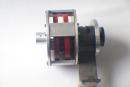
The drive transmits motor torque through an outer-magnet / isolation-can / inner-magnet chain to the agitator shaft, with no moving part crossing the reactor wall. The isolation can is typically Hastelloy C-22 or B-2, withstanding HCl, HBr, and mixed-acid attack. In-reactor bearings use SiC or PTFE sliding bearings, self-lubricated by the process fluid (or externally flushed), reaching 8000–12000 hours service without intervention.
Application notes
Three checks dominate pharma use: (1) CIP/SIP compatibility — the magnet cavity must take 130 °C steam sterilisation, with surface polish Ra ≤ 0.4 μm to deny microbial harborage; (2) metered low-speed control — fermenters typically run 50–300 rpm, so verify magnet synchronism under low-speed high-torque conditions, optionally specifying a stronger field; (3) qualification documentation — Horus provides FDA 21 CFR Part 11-compatible IQ/OQ packs and full material traceability (MTRs).
Selection guide
Rule-of-thumb sizing: a 500 L reactor needs ~30 N·m, a 3000 L reactor ~150 N·m, with a 1.5 safety factor. Media viscosity above 5 Pa·s requires re-checking start-up torque — viscous starts can hit 2.5× steady-state. The Horus HCL-RX reactor series ships with DIN/ANSI flanges for drop-in retrofit.