Background
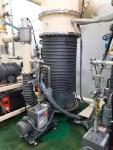
ITO transparent conductive films are widely used in touch panels, OLED, and PV window films. The coating process requires a vacuum chamber held at the 10⁻⁴ Pa level while withstanding process bake-out above 350 °C. Traditional mechanical oil seals or lip seals develop micro-leaks within 1–2 months under repeated thermal cycling, causing unstable sheet resistance and batch yield drift. Transmitting rotary power from atmosphere into vacuum without opening the chamber — and achieving “zero leakage” — is the central maintenance pain point on these lines.
How it works
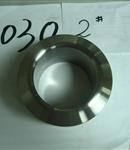
A magnetic coupling drive consists of three parts: an outer magnetic rotor, an inner magnetic rotor, and a non-magnetic isolation can between them (typically a thin-wall Hastelloy or 316L sleeve). The motor spins the outer rotor; the outer magnets drag the inner rotor through the isolation can synchronously; the inner rotor shaft drives the substrate carrier or transport rollers on the vacuum side. No moving part ever crosses the vacuum wall — the seal becomes a fully static flange seal, holding leak rate stably at the 10⁻⁹ Pa·m³/s level.
Application notes
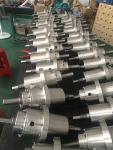
ITO lines come in two common mounting orientations: horizontal substrate transport, and vertical cathode-shaft drives. For horizontal runs, mount the magnetics on the chamber sidewall and use the rigid HCL series — it transmits high torque and handles the inertia of a 600 mm carrier. Vertical drives are typically used for cathode rotation (rotary magnetron); the compact HCM series with a water-cooled jacket is recommended to keep the magnets from demagnetising as the target heats up. The isolation can is the only vacuum barrier — leak-check it and inspect wall thickness on a schedule.
Selection guide
Watch three parameters: rated breakaway torque must be at least 1.8× the load torque to leave headroom for reverse impacts and process acceleration; magnet operating temperature must exceed bake-out (250 °C for SmCo, 180 °C for NdFeB); choose isolation-can material by process atmosphere — 316L for pure Ar, Hastelloy C-276 for chlorinated/halogen gases. Horus standard models cover 0.5–500 N·m across the range and can be made to customer drawings.